

Most Mumbai-based organizations — whether they're a 50-person tech startup in Andheri or a 5,000-employee BFSI firm in BKC — share a common blind spot. They invest heavily in recruitment and almost nothing in structured capability development.
The result is predictable. New hires get thrown into roles without any consistent onboarding framework. Managers get promoted for their technical output, then struggle immediately with people management. Teams communicate in silos. Customer-facing staff handle complaints the same way they did five years ago, regardless of how the market has changed.
The costs aren't always visible on a P&L. But they show up: in turnover numbers, in client escalations, in projects that miss scope and deadline, in 360-degree feedback that says the same things year after year.
A well-designed employee training program doesn't fix culture overnight. But it does give people the language, tools, and frameworks to behave differently — and gives organizations a baseline to hold them to.
What Getting Roots Delivers — Corporate Training Programs in Mumbai Built for Business Outcomes
Getting Roots has been designing and delivering corporate training programs since 2002. Over 22 years, we've conducted more than 1,000 workshops and 500+ enterprise training programs across sectors ranging from manufacturing to banking to healthcare.
We're certified by FranklinCovey and Dell — two certifications that shape how we approach behavioral change and technology-aligned learning respectively. More importantly, we've sat across the table from L&D heads, CHROs, and business unit leaders long enough to know what they actually need versus what a standard training catalog offers.
Our approach is instructor-led and practical. We don't believe in knowledge-transfer sessions where a trainer reads slides at employees for six hours. Every program we design is built around the specific skill gap, the specific team, and the specific business context. That's not a marketing claim — it's how we've kept 2,000+ clients coming back.
If you're evaluating multiple providers, this breakdown of the Top 10 Corporate Training Companies in India is worth reading before you make any decision.
The Types of Employee Training Programs We Offer
There's no single "corporate training" — that phrase covers at least eight distinct categories of learning intervention. Here's what we deliver in Mumbai and across India:
Leadership Training for Managers
Most leadership training fails because it targets the wrong moment. Companies send people to leadership programs after they've been managing teams for two or three years — by which point, habits (good and bad) are already formed.
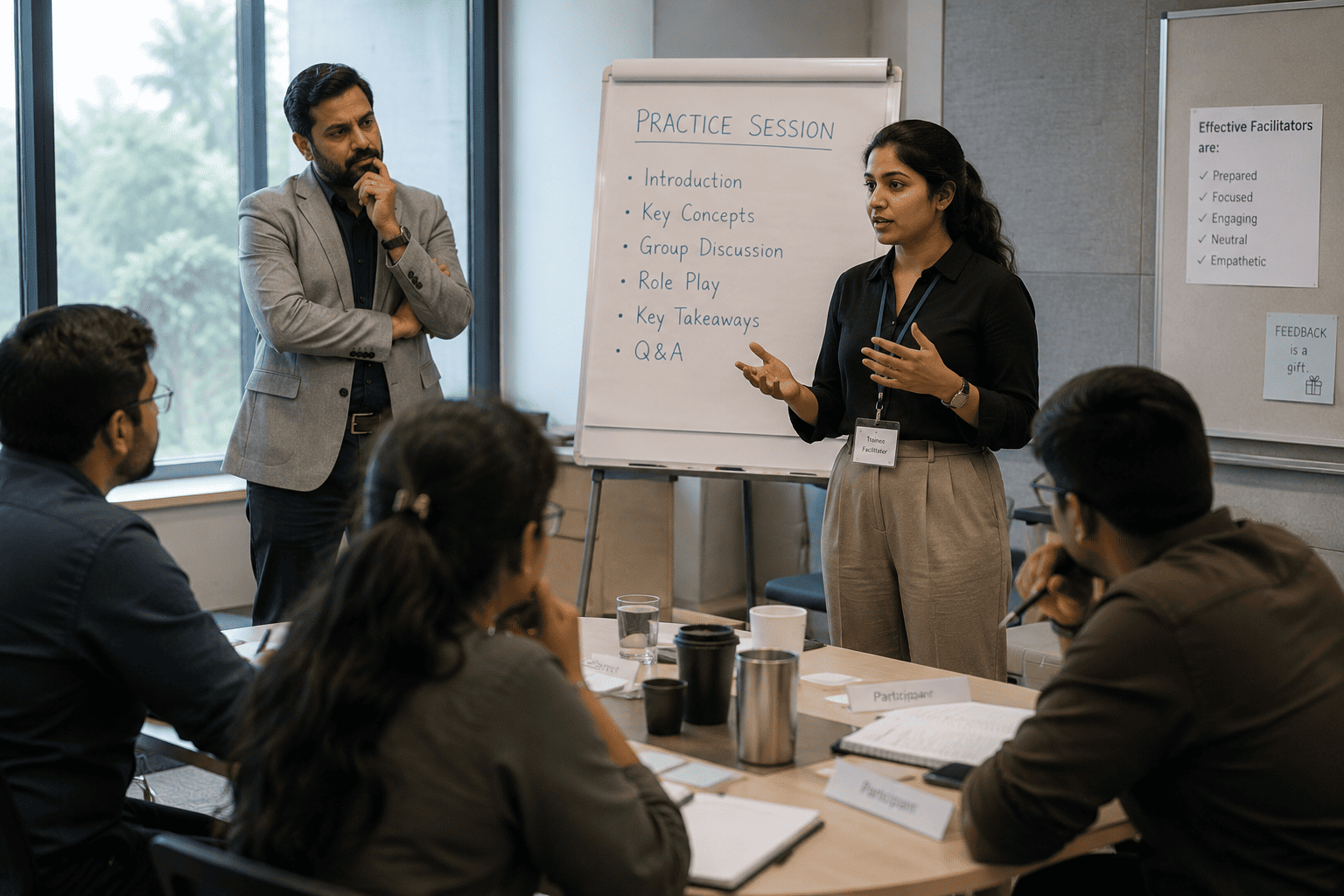
The more effective approach is developmental leadership training that runs alongside a person's early management journey. Our programs work with first-time managers, mid-level leaders, and senior leadership teams depending on the organizational need.
We cover decision-making under ambiguity, feedback conversations, cross-functional influence, and strategic communication. In organizations like Mahindra and Hyundai, where leadership at the plant and regional level directly impacts operational outcomes, these aren't soft skills — they're operational requirements.
For enterprises looking for a structured leadership curriculum, our Leadership Development Training Programs in India page covers the full program architecture.
Soft Skills Training for Employees
The phrase "soft skills" has an unfortunate name. There's nothing soft about being able to negotiate with a vendor, de-escalate an angry client, or present a business case to a CFO. These are skills that directly affect revenue, client satisfaction, and organizational reputation.
Our soft skills training programs cover communication, emotional intelligence, conflict resolution, presentation skills, business writing, and workplace collaboration. We've delivered these programs for institutions as varied as Fortis Hospitals — where clinical staff needed structured communication frameworks for patient interactions — and Deutsche Bank, where relationship managers needed to navigate complex conversations with high-net-worth clients.
The delivery is always contextual. A conflict resolution workshop for a hospital ward team looks very different from one designed for a sales department.
Explore the full scope of our Soft Skills Training in India programs.
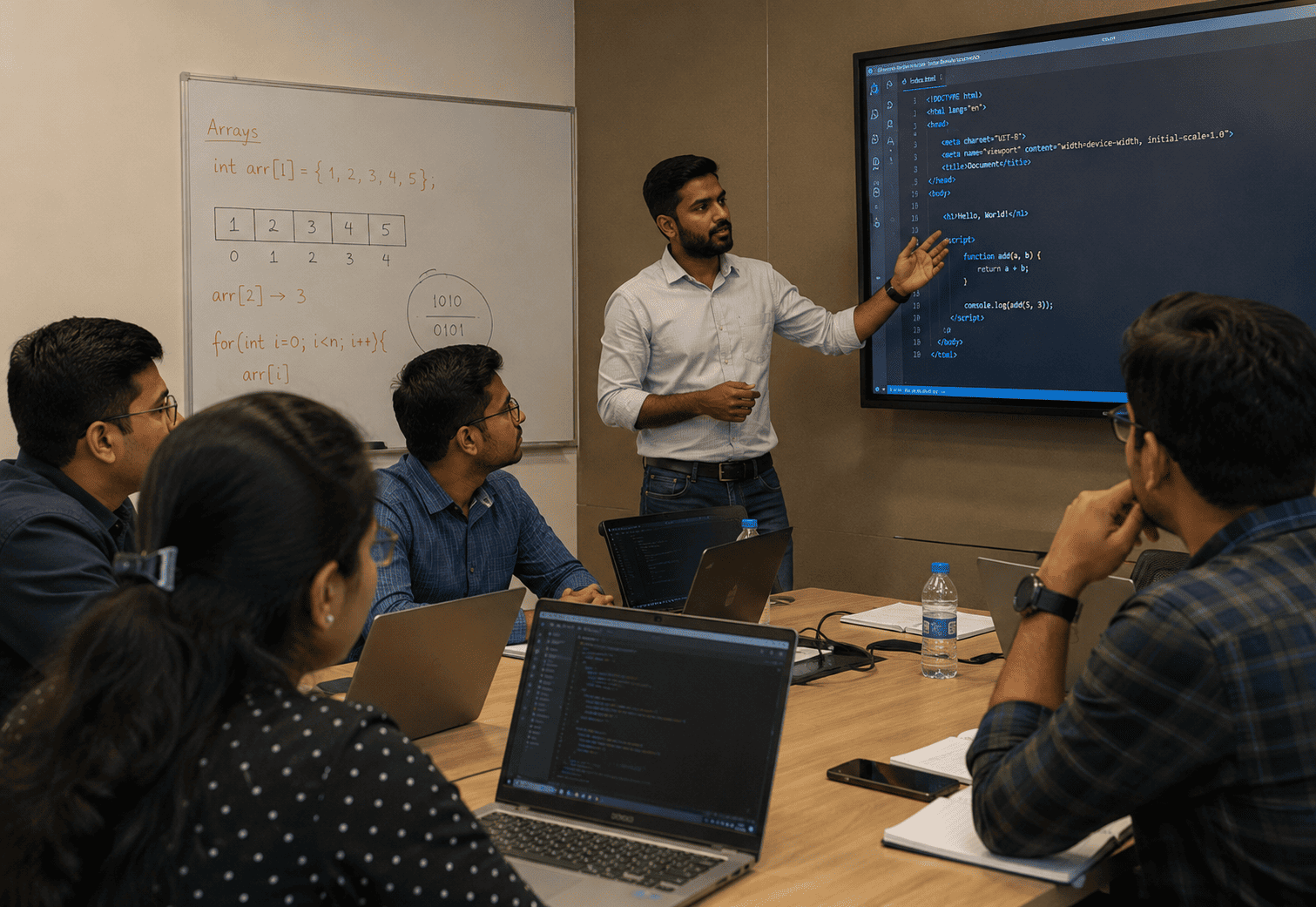
IT Corporate Training Services
Technology adoption fails when it's treated as a rollout problem rather than a learning problem. We've seen organizations spend crores on enterprise software — ERP, CRM, cloud platforms — only to find that 60% of employees are still using workarounds six months later.
Our IT corporate training services bridge the gap between tool implementation and actual usage. We design training for specific platforms, specific user roles, and specific business processes — not generic "how to use the software" sessions.
We've supported CSC e-Governance Services India Limited in building digital capability at scale, and worked with Micromax on internal technology training as the company navigated significant product and infrastructure shifts.
Employee Onboarding Training Programs
Onboarding is the most underinvested area of corporate training in most Indian organizations. The average new hire in a Mumbai company takes 3–6 months to reach full productivity. A structured onboarding program consistently reduces that to 6–10 weeks.
What does structured onboarding actually contain? It's not just HR documentation and a company culture video. It's role-specific skill orientation, process walkthroughs, manager-to-employee expectation setting, and a 30-60-90 day learning plan with measurable milestones.
We've built onboarding programs for large organizations including Kotak Mahindra Bank and Axis Bank, where the scale of hiring makes inconsistency an expensive problem. When you're bringing in 200 new relationship managers across Mumbai branches in a quarter, every week of unproductive onboarding has a calculable cost.
Customized Corporate Workshops
Not every training need fits a pre-existing program. Some of the most impactful work we do is designing one-day or two-day workshops built specifically around a single organizational problem.
Common examples: a newly merged team that hasn't aligned on working norms; a product team that needs to improve how it communicates technical constraints to non-technical stakeholders; a middle-management layer that's being asked to operate with more autonomy than they've had before.
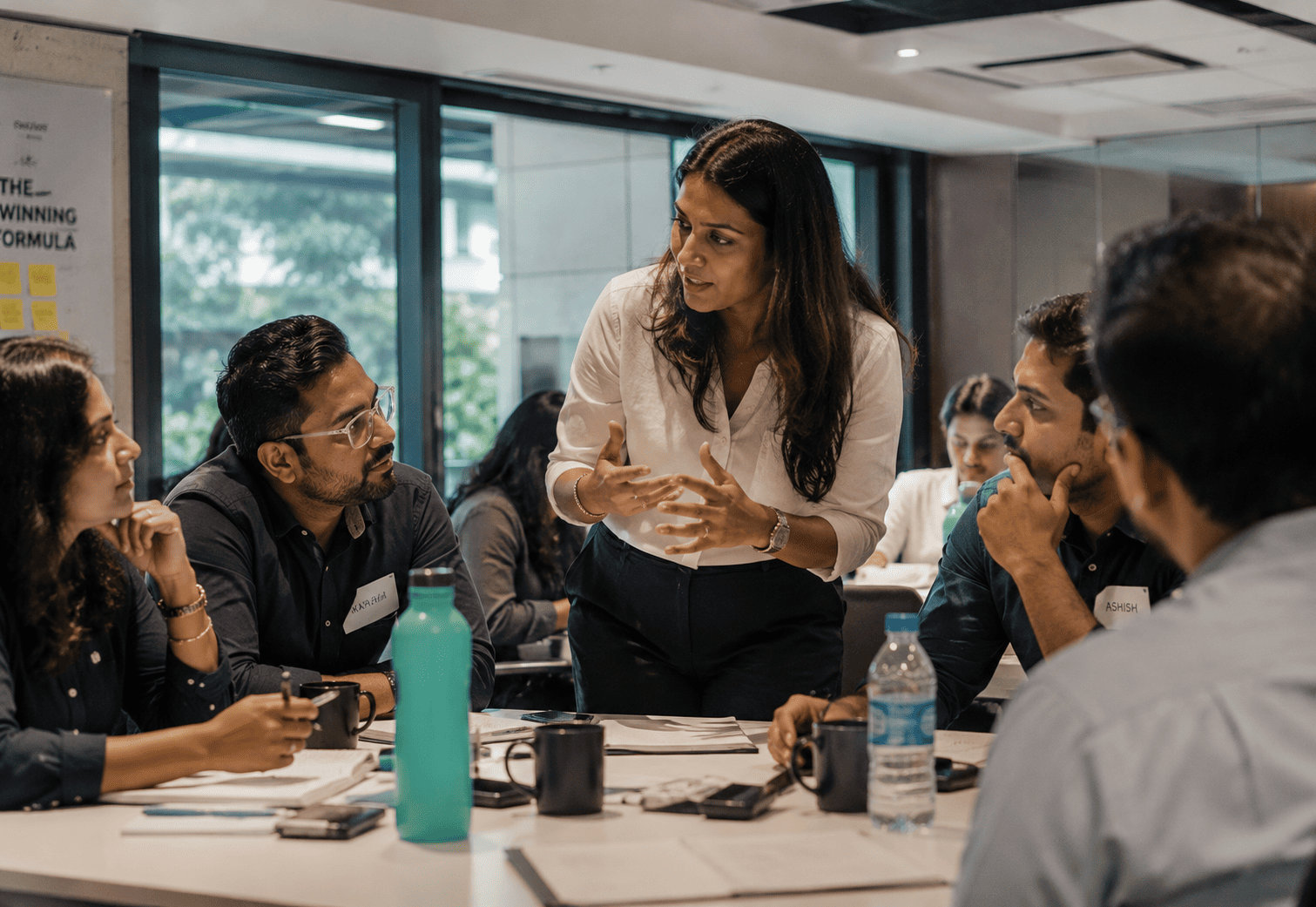
These workshops combine diagnostic work (we speak to stakeholders before we design anything), facilitated learning, and post-workshop action planning. The goal isn't a good session — it's a measurable behavior change three months later.
Industry-Specific Corporate Training Solutions
Corporate learning needs differ by industry. A leadership challenge at a manufacturing plant in Pune is structurally different from a leadership challenge at a private hospital in Mumbai. Here's how we approach the industries we serve:
Banking and Financial Services
Banks and NBFCs need training that covers both skills and regulatory awareness. Customer-facing staff need structured communication and objection-handling capability. Back-office teams need efficiency and accuracy under pressure. We've worked with HDFC Bank, Indiabulls, and Bharti AXA General Insurance on programs spanning sales effectiveness, compliance communication, and leadership at the branch level.
Automotive and Manufacturing
In manufacturing, the quality of frontline supervision has a direct bearing on output, safety, and efficiency. We've partnered with Maruti Suzuki, Hero MotoCorp, Continental ContiTech, and Motherson Sumi Systems Limited on supervisory development, operational communication, and cross-functional team effectiveness.
Healthcare
Clinical expertise and patient communication are not the same skill. Doctors and nurses trained to high standards often haven't received formal training in how to communicate diagnoses, manage anxious families, or handle complaints. We've run structured programs for teams at Fortis Hospitals, BLK Super Speciality Hospital, and Saroj Super Speciality Hospital.
Public Sector and Government
Training in government organizations requires sensitivity to hierarchy, institutional culture, and the unique pressures of public accountability. We've delivered programs for Northern Railway, BSF, and BSES — organizations where the gap between formal rank and actual capability can have significant operational consequences.
Education
Universities and institutions increasingly need their faculty to develop facilitation skills, not just subject expertise. We've worked with Lovely Professional University, BML Munjal University, and DIT University on faculty development programs.
Here you could link to an external reference on how Indian enterprises approach L&D budgets differently by sector — e.g., a NASSCOM or CII report on corporate learning investment trends.
Online vs Offline Corporate Training in Mumbai — What Actually Works
The pandemic forced a fast and messy experiment on remote learning. Most organizations discovered that virtual training works well for knowledge transfer and works poorly for behavioral change.
Our experience since 2020 has clarified a few things:
Online programs work well for: product knowledge, compliance training, process orientation, foundational skill modules, and anything where participants are in different geographies.
In-person programs work better for: leadership development, team building, conflict resolution, sales role-plays, communication coaching, and anything that depends on real interpersonal dynamics.
We offer both. More importantly, we help organizations decide which format is appropriate for which learning objective — rather than defaulting to one because it's cheaper or more convenient.
For Mumbai-based enterprises, our offline programs are conducted at the client's premises or at training venues across the city. For pan-India programs, we combine in-person delivery for key cohorts with virtual delivery for scale.
Real Business ROI from Corporate Training — What the Numbers Actually Say
External reference opportunity: A peer-reviewed study or credible industry report (e.g., from Josh Bersin, ATD, or McKinsey) on measurable ROI from structured corporate training programs would strengthen this section's authority.
The question every CFO eventually asks about training is reasonable: how do we know it's working?
The honest answer is that ROI from corporate training is measurable, but most organizations don't measure it because they don't set up the measurement framework before the training runs.
ROI frameworks we recommend to our clients include:
Pre- and post-training skill assessments, tracked against specific competency indicators. For example: before running a feedback conversation workshop for 80 managers at J.K. Organization, we establish a baseline through structured observation and 360 survey data. Ninety days post-training, the same measurement is repeated.
Productivity metrics tied to the training objective. If an onboarding program is designed to reduce time-to-productivity, you measure average time to first independent output before and after the new program is implemented.
Retention data. High-quality learning programs correlate with employee tenure, because people stay in environments where they feel developed. Organizations like Asian Paints and Havells have invested in structured learning programs partly because the cost of replacing skilled talent is several times the cost of retaining them through development.
We've published a detailed guide on How to Measure the ROI of Corporate Training Programs with actual formulas — worth reading before you design your next program.
Our Training Methodology — How We Actually Design and Deliver
Most training companies have a catalog. We work backwards from your business problem.
The process looks like this:
Step 1 — Needs Analysis. Before we propose anything, we conduct structured conversations with HR, business unit heads, and wherever possible, a cross-section of the people who'll attend the training. This takes time. Skipping it is why most training doesn't stick.
Step 2 — Program Design. We map learning objectives to business outcomes, not to training hours. A well-designed two-day workshop sometimes creates more durable change than a five-day program that's been padded to justify its price.
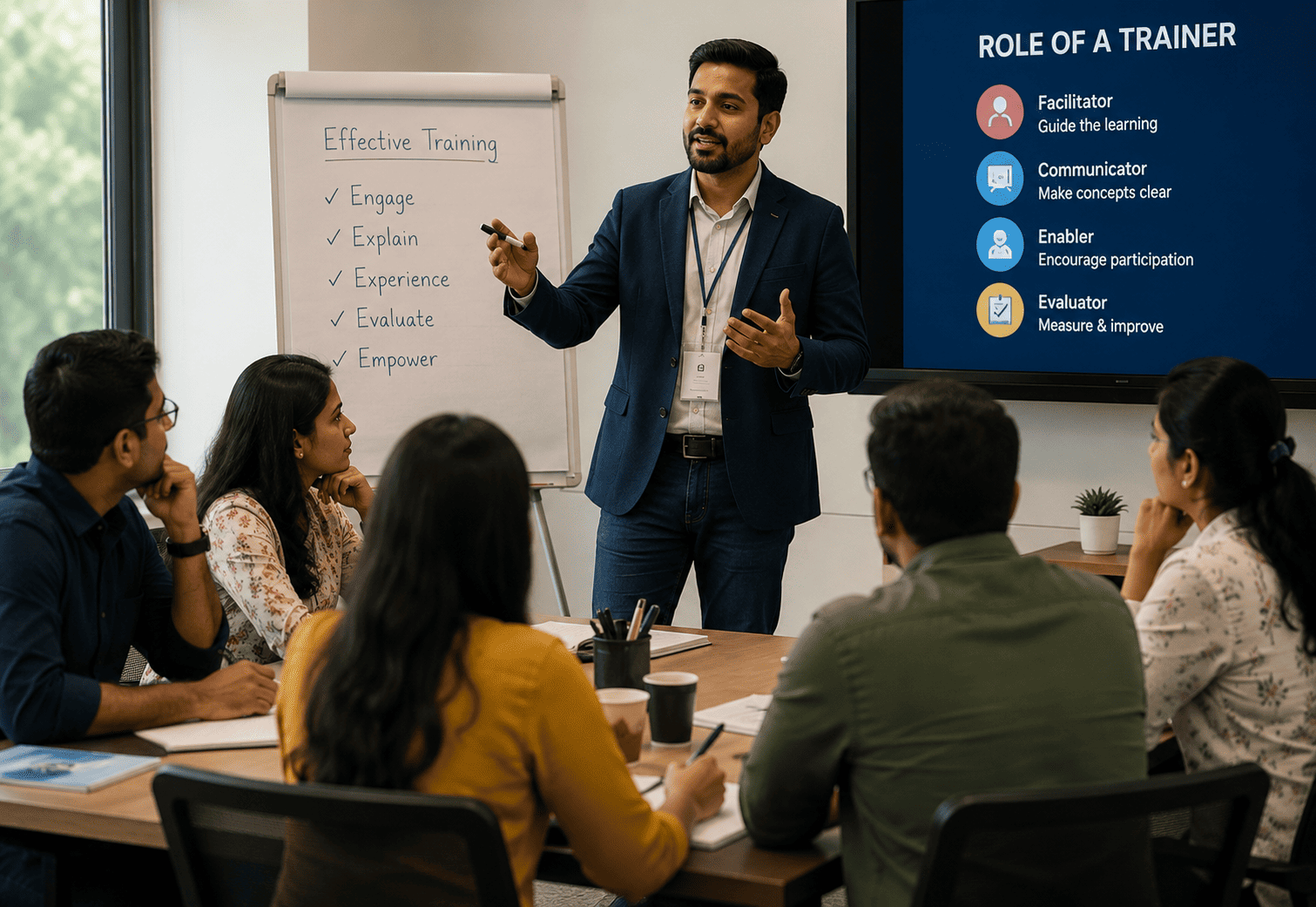
Step 3 — Instructor-Led Delivery. Our trainers are practitioners, not facilitators who read from slide decks. They bring domain knowledge, real case material, and the credibility that comes from having worked inside organizations like the ones they train.
Step 4 — Application Support. What happens in the room matters less than what happens in the 90 days after. We build post-training action plans, manager briefs, and reinforcement nudges into every program.
Step 5 — Measurement. Agreed-upon metrics, tracked at 30, 60, and 90 days. Not net promoter scores from happy sheets — actual behavior change data.
Case Studies — Corporate Training That Produced Measurable Outcomes
Large Private Bank — Onboarding at Scale
Industry: Banking and Financial Services Challenge: A major private bank was onboarding 150–200 new relationship managers per quarter across Mumbai. The existing onboarding took 12 weeks and still left new hires uncertain about client conversation protocols. Branch managers were spending disproportionate time on post-onboarding handholding. Training Solution: We redesigned the onboarding architecture from the ground up — reducing classroom time, replacing knowledge-dump sessions with role-based simulations, and building a manager enablement module that made post-onboarding coaching structured and consistent. Outcome: Time-to-productivity dropped from 12 weeks to 7 weeks on average. Branch manager time spent on foundational onboarding support fell by approximately 40% within two quarters.
Automotive Components Manufacturer — Supervisory Development
Industry: Auto Components / Manufacturing Challenge: A mid-tier manufacturing organization was experiencing quality inconsistencies traced partly to frontline supervisor behavior — specifically, how supervisors handled non-conformance situations and shift handover communication. Training Solution: A structured supervisory effectiveness program delivered over three days, combining accountability conversation frameworks with operational communication protocols. The program was piloted on 30 supervisors at one facility before being rolled out to 120 supervisors across three plants. Outcome: Self-reported quality non-conformance escalations at the pilot facility dropped 28% in the quarter following training. Post-training observation confirmed supervisors were using structured handover communication in 80%+ of observed shifts.
Specialty Hospital Group — Clinical Communication
Industry: Healthcare Challenge: A multi-speciality hospital group was receiving recurring patient satisfaction complaints that didn't relate to clinical outcomes — they related to how information was communicated. Patients and families felt uninformed, despite clinical teams delivering appropriate care. Training Solution: A clinical communication program designed specifically for senior nurses, resident doctors, and patient relations staff. The program covered explaining diagnoses to non-medical audiences, managing family anxiety during admissions, and structuring complaint responses without legal exposure. Outcome: Patient satisfaction scores (measured via post-discharge surveys) improved by 19% at the primary pilot hospital within two months. The program was subsequently extended to two additional facilities.
Large FMCG Manufacturer — Middle Management Effectiveness
Industry: FMCG / Manufacturing Challenge: A consumer goods manufacturer was promoting high performers from individual contributor roles into people management without providing any formal transition support. Within 18 months, the attrition rate among direct reports of new managers was 30% higher than among teams managed by experienced leaders. Training Solution: A first-time manager program delivered over six months in three modules — covering team communication, performance conversations, and managing under uncertainty. Managers were given peer cohort groups and assigned an internal sponsor from senior leadership. Outcome: Attrition among direct reports of trained managers dropped by 22% in the 12 months following program completion, compared to an untrained cohort group tracked over the same period.
Why Choose Getting Roots for Corporate Training in Mumbai
There are dozens of corporate training companies in Mumbai. Here's what differentiates how we work:
We don't start with a catalog. We start with your problem. This isn't a sales position — it's a design position. Every program we deliver is built around a specific organizational need, not adapted from a generic template.
Our trainers have done the work. The people who run our leadership programs have managed teams. The people who run our sales training programs have sold. This matters in the room. Participants can tell within the first hour whether a trainer understands their world or is presenting about it from the outside.
We've been doing this for 22 years. That means we've seen training trends come and go. We've watched organizations invest in methodologies that were fashionable and forget about execution. Longevity in this industry isn't about survival — it's about having accumulated enough real-world feedback to know what actually works.
Our client list is a function of our outcomes. Organizations like Mercedes-Benz, ITC Limited, Schindler India, DCM Shriram, and Chambal Fertilisers and Chemicals don't re-engage a training partner that didn't deliver. They do.
For a broader picture of what we deliver nationally, see our Best Corporate Training Programs overview, or if you're evaluating providers for Delhi NCR, our Corporate Training in Delhi page is relevant.
Ready to Talk About What Your Teams Actually Need?
A lot of organizations come to us after a bad experience with training that didn't change anything. We understand why that happens. It's usually not because training doesn't work — it's because the wrong program was chosen, or the right program was delivered in the wrong way, or nobody set up any way to measure whether it worked.
If you're looking for corporate training in Mumbai that's designed around your specific business problem and measured against real outcomes, we're worth talking to.
Request a Free Training Needs Assessment
Download Our Corporate Training Brochure
No commitment required. Just an honest conversation about what your teams need.